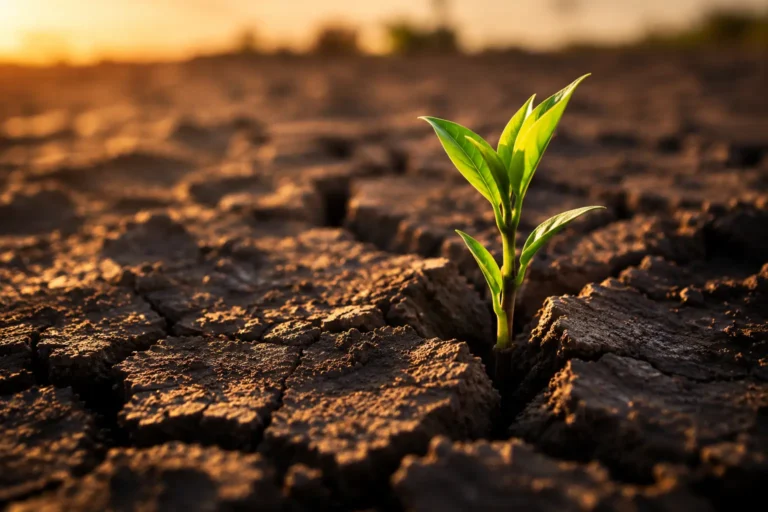
Some people seem to absorb difficulty without breaking. They lose a job, face a painful ending, or walk through a season of genuine hardship and somehow come out the other side still standing, still moving, still themselves.
It is easy to watch someone like that and conclude that they are simply built differently. That resilience is something you either have or you do not. That some people are naturally equipped to handle what life throws at them and others are not.
That conclusion is understandable. It is also wrong.
Resilience is not a personality trait distributed at birth to a fortunate few. It is a skill. One that can be understood, practised, and developed over time by almost anyone. And understanding that single fact changes the way you approach every difficult thing that comes your way.
What Resilience Actually Is
The word resilience comes from the Latin word resilire, meaning to spring back. In engineering, it refers to the ability of a material to absorb pressure and return to its original shape. In human terms, the meaning is similar but richer.
Psychological resilience is not the absence of struggle. It is not the ability to feel nothing when hard things happen. It is not toughness in the sense of being unmoved or unaffected. Resilient people feel loss, fear, grief, and uncertainty just as acutely as anyone else.
What sets them apart is not what they feel. It is what they do with what they feel.
Resilience is the capacity to process difficulty without being permanently defined or derailed by it. It is the internal flexibility that allows you to bend under pressure without snapping. It is the quiet, practised ability to find your footing again after being knocked off balance.
Researchers who have studied resilience across decades and populations consistently find that it is shaped far more by habits, thought patterns, relationships, and daily choices than by anything fixed in a person’s nature. This is genuinely good news. Because it means the life you are living right now, including the hard parts, is already giving you material to work with.
Understanding this connects closely to something deeper worth exploring: [who you are beneath your conditioning] and the beliefs you hold about your own capacity to cope. Because resilience is often less about the circumstances and more about the story you tell yourself inside them.
Why Resilience Matters More Than You Think
Difficulty is not optional. Every life, without exception, contains seasons of loss, failure, disappointment, and uncertainty. The question is never whether hard things will come. The question is what internal resources you will have available when they do.
Without resilience, setbacks tend to compound. A failure becomes evidence of permanent inadequacy. A painful experience becomes a reason to stop trying. A difficult season stretches into a long withdrawal from the things that matter most. The protective instinct to avoid further pain ends up creating a smaller and smaller life.
With resilience, the same setbacks become something different. Not easy. Not painless. But navigable. A failure becomes information. A difficult season becomes something you moved through rather than something that stopped you. The capacity to keep going, even imperfectly, remains intact.
There is also something worth noting about resilience and growth specifically. Personal growth is not a comfortable process. It asks you to change, which means it asks you to face uncertainty, to sit with discomfort, and to keep moving when the outcome is not yet clear. Without resilience, the discomfort of growth becomes a reason to stop. With it, the same discomfort becomes something you can meet with curiosity rather than retreat.
This is also why [identifying your core values] matters so much in the context of resilience. When you are clear about what genuinely matters to you, setbacks lose some of their power to destabilise you completely. You still feel the impact. But you have something solid to return to.
The Shift: What Actually Helps
Reframe what setbacks are for
One of the most significant shifts in building resilience is changing the meaning you assign to difficulty. This is not about toxic positivity or pretending that hard things are secretly wonderful. It is about recognising that difficulty and growth occupy the same space.
Every skill you have developed came through a period of not yet knowing how. Every strength you carry was shaped by something that tested you. This is not coincidence. It is how growth works. The brain literally builds new neural pathways through the process of working through challenge, not around it.
When a setback arrives, the question worth asking is not only “why is this happening to me” but also “what is this asking of me.” That single shift in framing does not make the situation easier. But it changes your relationship to it in a way that keeps you active rather than passive inside it.
Build your capacity before you need it
Resilience is like physical fitness in one important way: you cannot build it in a crisis. You build it in the ordinary days, through the small practices that strengthen your capacity to handle pressure before the pressure arrives.
Sleep, movement, time in nature, genuine connection with people you trust, regular moments of stillness. These are not luxuries. They are the infrastructure of resilience. A nervous system that is chronically depleted has very little reserve to draw on when something genuinely difficult arrives. A nervous system that has been consistently tended has considerably more.
This is also why [the connection between sleep and mental clarity] is not a separate topic from resilience. Rest is where your brain and body rebuild the resources that difficulty draws down. Protecting your sleep is, among other things, an act of resilience.
Develop the habit of self-compassion
It might seem counterintuitive to list self-compassion as a resilience tool. Surely resilience is about toughening up rather than being gentle with yourself.
Research suggests otherwise. Studies by psychologist Kristin Neff and others have consistently found that people who respond to their own failures and difficulties with self-compassion rather than self-criticism recover faster, are more willing to try again after setbacks, and demonstrate higher levels of emotional resilience over time.
Self-criticism in the face of failure feels productive because it is active. It feels like you are doing something. But what it actually does is keep you stuck in the experience of the setback, replaying it and reinforcing the emotional weight of it, rather than processing it and moving forward.
Self-compassion is not letting yourself off the hook. It is acknowledging that you are a human being in a difficult moment, that difficulty is a universal experience, and that you deserve the same basic kindness you would offer someone you care about. That acknowledgement creates the psychological safety to learn from what happened and try again.
Strengthen your connections intentionally
Resilience is rarely built alone. The research on people who demonstrate high resilience across genuinely difficult life circumstances consistently points to one common factor: the presence of at least one trusted relationship. Someone who sees them clearly and remains steady beside them.
Connection does not solve the problem. But it changes the experience of carrying it. Being genuinely known by even one or two people creates a buffer against the isolation that difficulty often brings, and isolation is one of the things that turns a hard season into a genuinely damaging one.
This does not require a wide social circle. It requires depth over breadth. A few relationships where honesty is possible, where you do not need to perform being fine, and where support flows in both directions.
Learn to sit with uncertainty
Much of what makes difficulty hard is not the difficulty itself but the uncertainty that surrounds it. Not knowing how things will turn out, how long something will last, or whether you will be able to handle what comes next.
Resilience is built in part by practising the capacity to remain present inside uncertainty without immediately needing to resolve it. This is genuinely uncomfortable, especially for people whose nervous systems have learned to treat uncertainty as danger. But like any capacity, it grows with practice.
Small daily moments of sitting with the unknown, of pausing before reacting, of tolerating the discomfort of not yet knowing, build the same muscle you will need when the uncertainty is far larger. The practice scales.
Keep moving, even slowly
One of the most consistent findings in resilience research is the importance of continued action, even when that action is small and imperfect. Not forcing a rapid return to normal. Not pretending to be further along than you are. But maintaining some forward movement, however modest.
This matters because action, even small action, reinforces the belief that you have agency inside your situation. And the belief that you have agency is one of the central components of resilience. The moment you stop moving entirely, the situation begins to feel like something that is happening to you rather than something you are moving through.
A Note on Progress
Building resilience is not a linear journey and it is not a destination you arrive at. There is no point at which life stops being difficult and your resilience is finally sufficient. It is an ongoing relationship with your own capacity, one that deepens over time through experience and intention.
You will have seasons where you surprise yourself with how much you can carry. You will have other seasons where something smaller than expected brings you to your knees. Both are part of it. Neither defines you permanently.
What matters is the direction of travel. Each time you process a difficulty rather than avoid it, each time you return to your values when something tries to knock you off course, each time you choose one small forward step over staying still, you are building something real. Something that compounds quietly over time in a way that eventually becomes the foundation everything else rests on.
The tree that survives the storm does not do so because the wind never reaches it. It survives because its roots go deeper than the storm can shake.